

Quick Summary
Encourage independent play by starting small, with about five minutes alone that you extend a few minutes each day. Set up a low, open play corner with three to five toys out at a time, rotating the rest weekly. Make sure your child is rested and fed first, since tired or overstimulated kids rarely settle into independent play.
- Start with five minutes of play and add a few minutes each day.
- Keep 3 to 5 toys out and store the rest in bins.
- Rotate the stored toys weekly to keep them interesting.
- Mark the play zone with a small rug and a Screen Free Fun sign.
- Choose one- or two-step printed activities and sit nearby without jumping in.
Table of Contents
- How to Encourage Independent Play in a 2 Year Old Without Screens
- Setting Up a Screen-Free Play Space Kids Can Use Alone
- How to Keep Kids Entertained Without Screens and Without Constant Help
- Frequently Asked Questions
How to Encourage Independent Play in a 2 Year Old Without Screens
Last Updated: November 12, 2026
Independent play is one of the most useful skills a toddler can build. Here are practical ideas for parents who want their child to play alone without reaching for a screen.
Most two year olds can play alone for short stretches. The trick is starting small. Try five minutes of play, then add a few minutes each day. Stay close at first, then slowly step back.
Watch out: a child who is tired, hungry or overstimulated will rarely settle into independent play, no matter how good the setup is.
Setting Up a Screen-Free Play Space Kids Can Use Alone
A simple play corner works better than a full playroom. Keep it low, open and easy to reach.
- Use a small rug to mark the play zone
- Keep 3 to 5 toys out at a time
- Store the rest in bins and rotate them weekly
- Place a "Screen Free Fun" sign on the table so everyone knows the rule
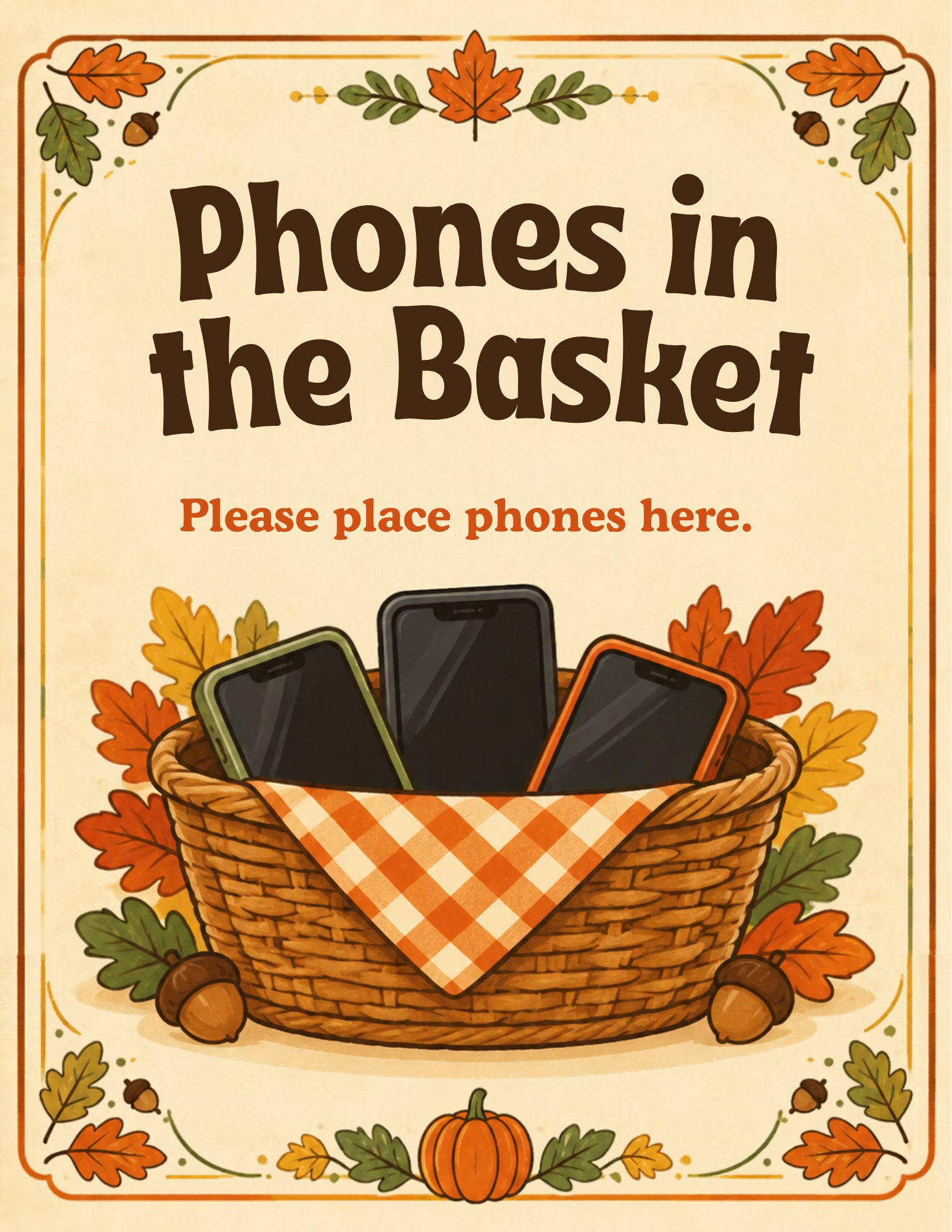
A Screen Free Fun "Phone in Basket" Sign can help the whole family put devices away before play starts. For more ideas on activities that hold a child's attention, see our guide to 11 screen free activities for kids that actually work.
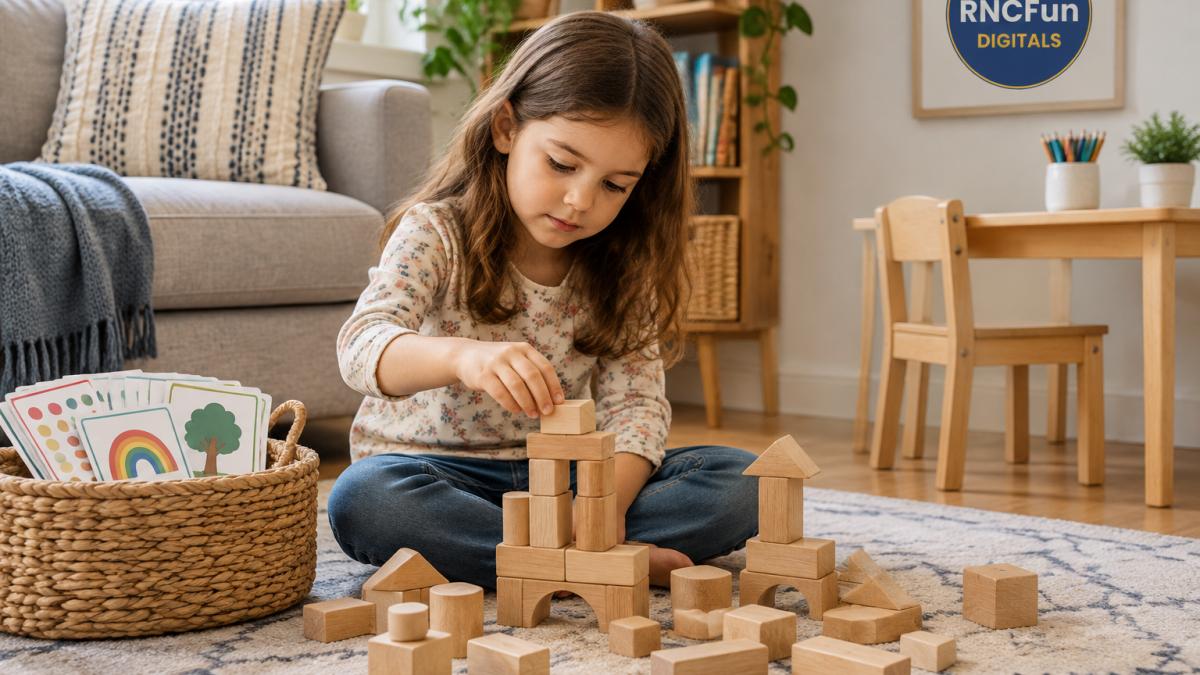
A few simple setup choices make it easier for a child to play alone.
| Setup step | What to do | Detail |
|---|---|---|
| Mark the zone | Lay a small rug | Defines the play area |
| Limit toys | Keep 3 to 5 out | Reduces clutter |
| Rotate toys | Store the rest in bins | Swap them weekly |
| Set the rule | Place a "Screen Free Fun" sign | Signals screen-free play |
How to Keep Kids Entertained Without Screens and Without Constant Help
Printed activities give a child something to do while you get a few minutes to yourself. Pick ones with clear steps and big pictures.
- Choose activities with one or two steps
- Print a few pages at a time to avoid clutter
- Sit nearby, but resist jumping in when the child gets stuck
If you want ready-to-print options, start with printable games for family game night you can print tonight and look at which printable activities work best for kids at home.
Frequently Asked Questions
How can I keep kids entertained without screens?
Keep a small set of ready-to-use activities within reach: a printed game night bundle, a coloring book, a simple scavenger hunt or a drawing challenge. Rotate them so they feel new. The Christmas Family Game Night Bundle from RNCFunDigitals ($6.99) includes 31 pages of games and activities for kids and families and is a digital, printable product with instant download. Start with one activity for 15 minutes and build from there.
How long should a child play independently?
It depends on age and the activity. Many 2 year olds manage a few minutes of self-directed play at first, and short windows of 5 to 10 minutes are a sensible starting point. Older children can sustain longer periods, often 20 to 30 minutes with a familiar activity. Extend the window gradually, and step in only when frustration builds rather than at the first sign of boredom.
How can I encourage independent play in a 2 year old?
Offer a few open-ended toys in a calm space, sit nearby, and let your child lead. Resist the urge to direct the play. When your child asks for help, describe what you see instead of taking over. Keep sessions short and end them while your child is still engaged, so they want to return to play next time.
